
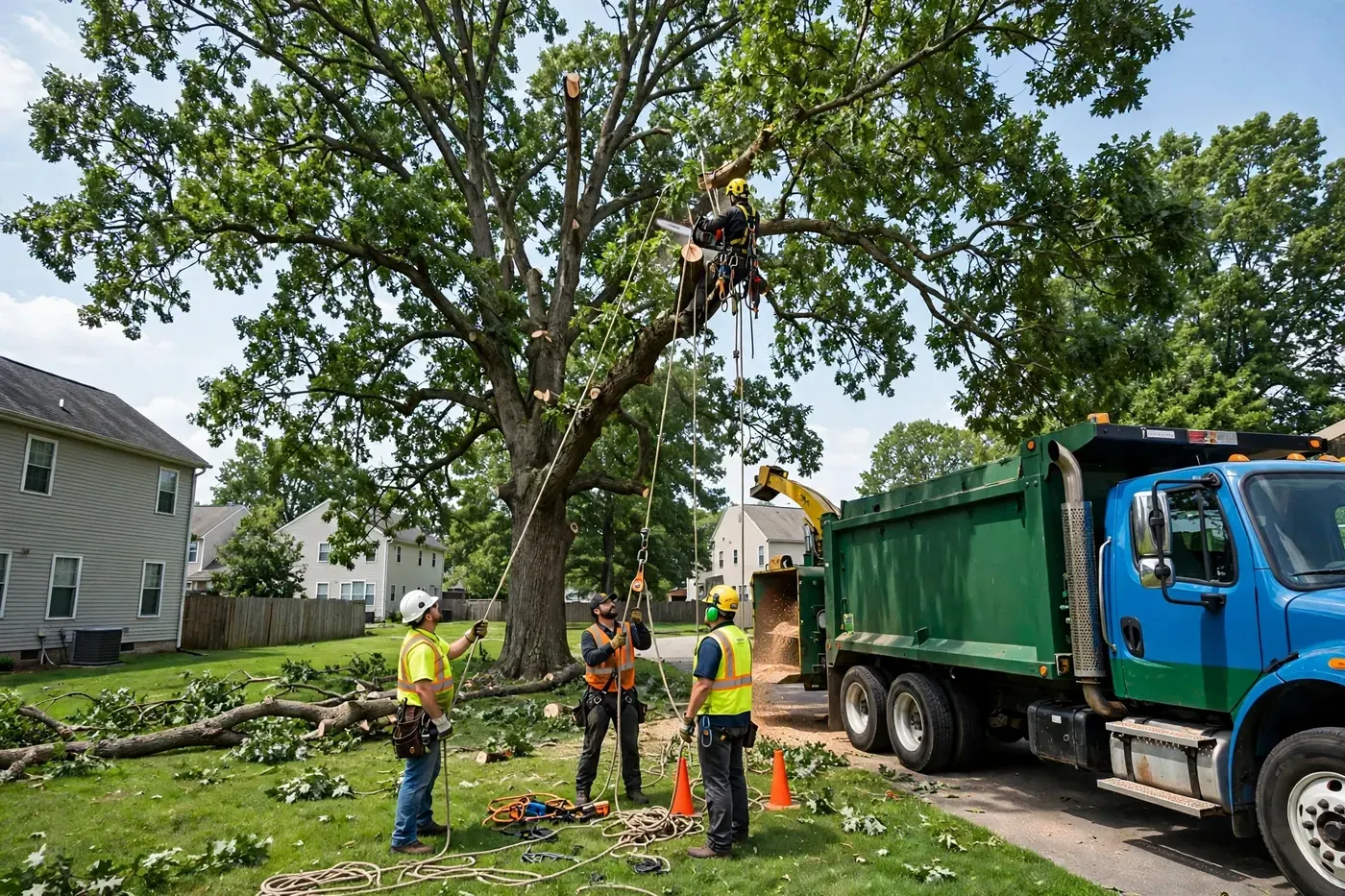
You do not need to be a tree expert. These simple tips keep your trees healthy and your home safe. Healthy trees add shade, curb appeal, and value to your home. Neglected trees become hazards. A little care each season prevents big problems later.
Prune in Late Winter
The best time to trim most trees is late winter. The trees are dormant. We can see the branch structure clearly. Pruning then leads to strong growth in spring. Oak, maple, and pine all do well with winter pruning.
Skip heavy pruning in fall. Cuts made in fall heal slowly. Disease spreads easier in cool, wet weather. One exception: dead or dangerous limbs can come off any time of year. Safety never waits for the right season.
After Every Big Storm, Look Up
Nor'easters and summer storms hit Southern Maryland hard. After one passes, walk your yard. Look for cracked limbs, hanging branches, and trees leaning in a new way. Damaged limbs are the first to fall next time. Call us if you spot trouble.
Check from a distance first. A cracked limb can drop without warning. Do not stand under a damaged tree while you inspect it. If a limb is hanging over your roof or driveway, keep people and cars away until a pro looks at it.
Know the Signs of a Dying Tree
A tree tells you when it is in trouble. No leaves in spring. Bark falling off in sheets. Fungus growing at the base. Big dead sections in the crown. One sign may be nothing. Two or three mean it is time for a pro to look.
Mushrooms at the base are a red flag. They often mean the roots are rotting underground. A tree can look fine up top while its base is failing. That is the kind of tree that falls on a calm day with no warning.
Stop the Mulch Volcano
Piling mulch against the trunk rots the bark. It invites disease and pests. Keep mulch a few inches away from the trunk. A flat donut shape beats a volcano every time.
Two to three inches of mulch is plenty. More is not better. Deep mulch suffocates the roots. It also gives mice a cozy home right against your tree. Pull old mulch back before adding new layers each spring.
Keep Limbs Off Your Roof
Limbs rubbing your roof wear out shingles. They give squirrels a bridge inside. They drop leaves in your gutters. Trim branches back so nothing touches the house. Your roof will thank you.
Aim for at least six feet of clearance between branches and your roof. Storms make branches whip and sway. What barely touches on a calm day can slam your shingles in high wind.
Water New Trees the Right Way
A new tree needs water every week for its first two years. Deep watering beats daily sprinkles. Soak the root zone slowly so water sinks in deep. Deep roots make a strong tree.
Established trees usually handle Maryland rain fine. But in a long dry spell, give mature trees a slow soak too. Water in the morning. Wet leaves overnight invite fungus.
Watch for Invasive Pests
Emerald ash borer kills ash trees fast. Spotted lanternfly is spreading in Maryland. If you see odd bugs, sticky leaves, or sudden decline, do not wait. Early action can save the tree.
Sticky mess on leaves or cars under a tree often means sap-feeding insects. Sooty black coating on leaves is another clue. Take a photo of anything odd. A pro can often ID the pest from a picture and tell you if treatment will work.
Do Not Top Your Trees
Topping means cutting the top off a tree to make it shorter. It is one of the worst things you can do. The tree grows weak, ugly shoots. Those shoots break off in storms. The big open cuts invite rot. A topped tree becomes more dangerous, not less.
If a tree is too tall for its spot, the answer is careful crown reduction by a pro — or removal and a better-suited replacement. Never hire anyone who suggests topping. It is a sign they do not know proper tree care.
Know When to Call a Pro
Some jobs are fine to do yourself. Raking leaves. Light pruning of small branches you can reach from the ground. Mulching. But call a pro when the job needs a ladder, a chainsaw near power lines, or anything bigger than your arm.
Three signs you need us now: a tree leaning more than it used to, large dead limbs over your house or driveway, and any tree work within ten feet of power lines. Power line work is never a DIY job. Call us and the power company before you touch anything near a line.
Get Your Free Estimate
One call. Free visit. Written price. No pressure. Call (240) 213-4913 — tap to call Or use our short form: your name, your phone number, and the service you need. We will call you back.